All posts by asbexpo

sika

Sika to Acquire MBCC Group for $6 Billion

Sika to Acquire MBCC Group for $6 Billion


sika

Sika recently announced that it has signed a definitive agreement to acquire MBCC Group, the former BASF Construction Chemicals, from an affiliate of Lone Star Funds for a consideration of CHF 5.5 billion (approximately $6 billion). Sika reports that the acquisition will complement and broaden its product and solution offerings in four of five core technologies and seven of eight Sika Target Markets and will further strengthen the group’s geographic footprint.
MBCC has a product portfolio of global and local brands that reportedly enjoy a strong reputation for quality and reliability. The company participates in all phases of the construction life cycle and is reportedly a key contributor to the decarbonization of the construction industry.
“Two sustainability champions will join forces,” said Thomas Hasler, CEO of Sika. “Sika is first in class for sustainable solutions across the entire construction industry, and similarly, sustainability stands at the core of MBCC Group’s business. Together we will reinforce our complementary range of products and services across the entire construction life cycle. With our combined portfolio, we will enable and accelerate the future of sustainable construction for the benefit of customers, employees, shareholders, and coming generations.”
According to Jochen Fabritius, CEO of MBCC Group, “We have found a perfect partner who shares our core beliefs. Sika is well-known for its entrepreneurial spirit and its profitable growth strategy, including a strong acquisition track record. Our products and competencies will again be at the core of the business. Together with Sika, we are looking forward to exploring new and exciting business opportunities. I would like to thank Lone Star for the tremendous support during the past few years and for helping us to prepare for this next chapter.”

evonik

Evonik Enhances Polyurethane Additives Capabilities with New Innovation Center

Evonik Enhances Polyurethane Additives Capabilities with New Innovation Center

 
evonik

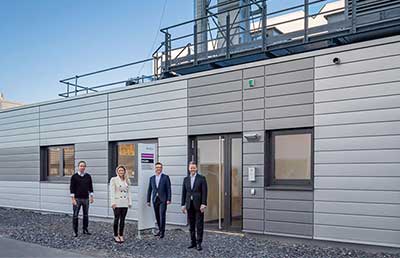
Evonik recently announced that it has expanded with a new state-of-the-art polyurethane (PU) laboratory and innovation facility at its Essen Goldschmidt site in Germany, which was inaugurated at the end of October. The new 400-sq-m laboratory will reportedly enhance the group’s development capabilities for high-performance specialty PU additives and processing aids for a variety of PU applications. According to Evonik, the focus is on high-growth application areas such as the production of sustainable artificial leather, low-emission catalysts for high-quality coatings and adhesives, performance additives for making PU shoe soles more durable and comfortable, and emission-optimized release agents for molded foams and elastomers.
“Our new laboratory and innovation center sends a strong signal to the market and reinforces our strategy to not only be the leading, but also the most innovative, solutions provider to the PU industry,” said Ralph Marquardt, head of Evonik’s PU additives business. “This latest investment enables us to develop innovative and more sustainable additive solutions for our customers to help them meet changing market demands and increasing environmental regulations.”
According to Matt Aldag, head of Evonik’s Advanced PU business, “The new facility’s state-of-the-art equipment enables our team to work efficiently and safely on developing new additive solutions and bring them to market much quicker.”

lucas

R.M. Lucas Acquired By Artemis

R.M. Lucas Acquired By Artemis

 
lucas

Boston-based private equity firm Artemis Capital Partners (Artemis) announced the successful acquisition of R.M. Lucas, a leading manufacturer of coatings, sealants, and adhesives for roof repair and restoration. This partnership represents another milestone within Artemis’ history of Specialty Chemicals and Advanced Materials ownership.

Artemis Managing Director and new R.M. Lucas Board member, Peter Hunter, noted the fundamental fit with Artemis saying, “R.M. Lucas’ formulated coatings fit perfectly within the Artemis Specialty Chemicals and Advanced Materials segment. Additionally, it represents yet another Artemis portfolio company serving acyclical, high conviction end markets with technological innovation and quality customer service. We’re honored to partner with Rob and the R.M Lucas team.”

Deal lead and Artemis Vice President, Olly Forrer, commented on the partnership and future of RM Lucas, “I truly can’t say enough about the Barry Family and the business that they’ve built. We’re excited to partner with Rob and our new teammates to strategically build the middle market leader of roof repair and restoration coatings. RM Lucas’ exceptional product depth and customer-centric focus make it the ideal platform to serve increasing demand in the roof repair and restoration market.”

Under Artemis’s ownership, R.M. Lucas will continue to operate as an independent company from its headquarters in Chicago, IL. Deloitte Corporate Finance LLC acted as the exclusive financial advisor to R.M. Lucas Co.

emobility start

How Adhesives Are Driving Advances in E-Mobility

How Adhesives Are Driving Advances in E-Mobility

 
emobility start

Today, there are 6.8 million hybrid and electric cars on the road, and by 2030, one out of four cars will fall into that category, according to research conducted by ChemBizR, a business consultancy dedicated to the chemicals industry. The shift from the internal combustion engine and, indeed, the advent of autonomous vehicles, is driving unprecedented innovation in automotive technology. Adhesives are among the enabling technologies contributing to what some experts are calling a fundamental transformation.

Electric motor assemblies

As motors become smaller and more efficient, new challenges in bonding technology have surfaced. Some of the main applications of adhesives in electric motors involve joining magnets, shafts and rotors, and stators and housings. A progressive reduction in motor size leads to tightened manufacturing tolerances, which drives up costs. Established joining methods, such as mechanical clamping or “bandaging” of magnets, are reaching their limits in terms of motor function and the production process. Consequently, they are being replaced by magnet bonding adhesives.

Adhesives have certain advantages over conventional joining methods: They compensate for tighter manufacturing tolerances, prevent fretting or contact corrosion, and provide impact resistance, which is essential for withstanding the high dynamic forces of electric motors. Adhesives’ vibration-damping characteristics reduce noise and provide an overall more pleasing acoustic environment.

Stress and heat distribution in electronics

Cars are turning into “brains on wheels,” as circuit boards in control units become smaller and more powerful. They also last longer than ever. Underfills and encapsulants play a key role in protecting the PCB. Adhesives manufacturers are working to find a solution for the joining, sealing, and encapsulation of electronic components, as well as materials to optimize thermal management. Distributing the stress and heat that electronic components can generate is a key goal.

Similarly, touchscreen displays are digitizing the driving experience. Radar systems, cameras, and sensors monitor the surroundings of a vehicle in real-time and transmit information about the car to the driver assistance systems. Transparent adhesives help improve the stability and image quality of displays.

Li-ion batteries add weight

For the widespread adoption of EVs, Li-ion batteries will need to deliver extended range on a single charge and come down in price. Also, the batteries should maintain a constant temperature, somewhere between 18° and 37°C. Adhesives help dissipate heat through conductive paste, protecting the batteries from overheating.

Lightweighting is a singular focus of car manufacturers, and they are shifting to components made of plastics, aluminum, and carbon fiber to move the needle. Recently, BASF, L&L Products, and Stellantis collaborated to reduce mass and improve crash performance on the composite tunnel for the Jeep Grand Cherokee L. Adhesives and sealants can enable lightweight automotive construction. Bonded joints can withstand high amounts of stress and temperature fluctuations while improving crash performance.

Rising demand for adhesive tape

Adhesive tape is forecast to be a key component for automotive manufacturers as they continue to pursue lightweighting opportunities. Adhesive tapes offer an advantage over traditional mechanical fixtures and eliminate some of the challenges associated with paste viscosity and dispensing techniques. The batteries of electric cars generate heat and voltage, which need to be shielded to ensure user safety. Double-sided tapes and special films can prevent power surges, and batteries can be wrapped in non-flammable materials that withstand temperatures up to 150°C.

Replacing mechanical fasteners

Different materials have varying thermal expansion coefficients. Mechanical fasteners, such as screws or bolts, do not allow expansion or contraction of joined materials under different temperatures. Adhesives, however, are sufficiently flexible to accommodate movements caused by the thermal expansion of the substrates even after they are fully cured. Anaerobic adhesives are not susceptible to corrosion, unlike mechanical fasteners. There are multiple reasons to replace mechanical fasteners with adhesives, where possible, in automotive applications.

red

Red Devil Water-Based Duct Sealant Line

Red Devil Water-Based Duct Sealant Line


red

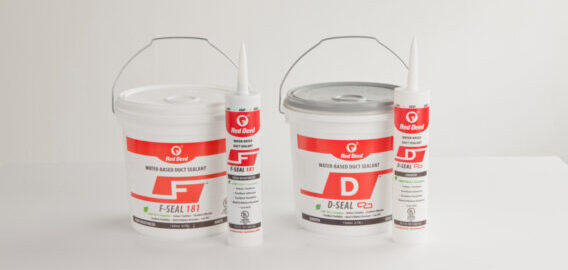
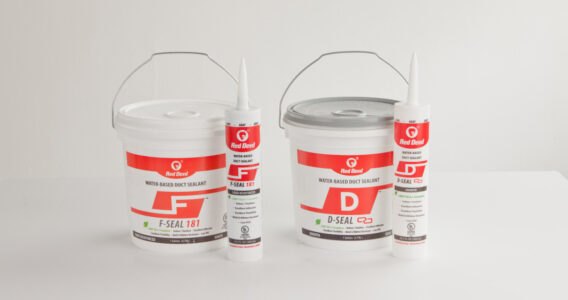
Red Devil®, a manufacturer of caulks, sealants, and painter’s hand tools, offers a full line of duct sealants for professional HVAC contractors and DIYers. The versatile lines include D-Seal Water-Based Duct Sealant and F-Seal 181 Water-Based Duct Sealant, both with adhesion for sealing metal and flexible ducts, vents, air conditioners, and other interior and exterior HVAC appliances.Water-Based Duct Sealant

Designed for use in conjunction with metal fasteners, Red Devil D-Seal is a smooth, water-based duct sealant suitable for all types of HVAC duct systems, including metal ductwork, fiberglass, and duct board. Suitable for commercial HVAC applications, D-Seal is specially formulated for permanent flexibility and adhesion. It provides water-resistance and sealing strength, exceeding all SMACNA Pressure & Sealing Classes, and is UL 181A-M and B-M approved. Designed for indoor and outdoor use, D-Seal features a fast dry time, mold and mildew resistance, and is low VOC. It is available in gray in 10.1 oz. and 28 oz. cartridges, as well as one gallon, two gallon, and five gallon pails.

Delivering many of the same benefits as D-Seal, the fiber-enhanced F-Seal 181 features fiber reinforcement for sealing strength and workability. Formulated for sealing both fiberboard and flexible ducts, F-Seal is suitable for interior and exterior ductwork. It also offers a fast dry time, mold and mildew resistance (when cured), exceeds all SMACNA Pressure & Sealing Classes, and is UL 181A-M and B-M approved. Designed for any sized sealing job, F-Seal 181 is available in white or gray in 28 oz. and 10.1 oz. cartridges as well as one gallon, two gallon, and five gallon pails.

Both D-Seal and F-Seal 181 seal high, medium, and low pressure HVAC duct systems, offer UV resistance, and contribute to LEED EQ Credit 4.1. For best results, the water-based duct sealants should be applied in temperatures between 40°F (and rising) and 110°F. Clean up can be accomplished with water and mild soap.

shelley huff

Serta Simmons Bedding Names Shelley Huff Chief Executive Officer

Serta Simmons Bedding Names Shelley Huff Chief Executive Officer


shelley huff

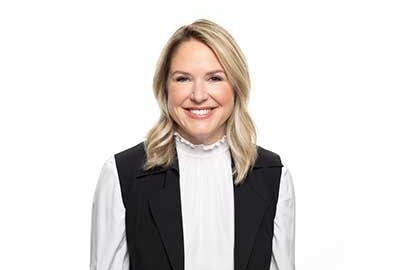
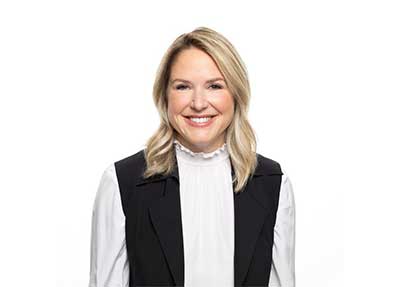
Serta Simmons Bedding, LLC (SSB), one of North America’s largest sleep companies, announced today that Shelley Huff, Chief Operating Officer of SSB and Chief Executive Officer of Tuft & Needle, has been named Chief Executive Officer of SSB, effective Dec. 1, 2021. Huff succeeds David Swift, who will retire from his post after serving as Chairman of the Board of Directors of Dawn Holdings, Inc., SSB’s parent company, since 2013 and as Chairman and CEO since 2019. Huff will also join the Board of Directors of Dawn Holdings, Inc. on Dec. 1.

“When I stepped into the CEO role two and a half years ago, I had a clear objective – to set the foundation for the company’s transformation from a heritage mattress business into a digital-first, consumer-centric sleep company,” said Swift. “One key focus was on ensuring we had the right people in place to drive the business forward and, from day one, Shelley has been a critical addition to the team. Her outstanding track record and deep expertise in omnichannel retail, as well as her consumer-centric and team-first approach, is unmatched. She is uniquely qualified to lead Serta Simmons Bedding into the future.”

“It is a privilege to have the opportunity to lead the Serta Simmons Bedding team into the next phase of our company’s transformation,” said Huff. “Dave has put in place the critical building blocks to set the company up for growth. With this foundation, in addition to our unwavering commitment to quality craftsmanship and innovation, portfolio of power brands, top retail and supplier partners, and most importantly, incredible talent across the organization, we are well-positioned to become the trusted authority on sleep.”

In conjunction with Huff assuming the role of CEO, the company has appointed David Porter as non-executive Chairman of the Board. Porter is a retail executive with more than 30 years of leadership experience at companies including Walmart, DreamWorks Animation and Microsoft, where he currently serves as Corporate Vice President responsible for the company’s direct-to-consumer global retail business.

“It is an honor to join the Dawn Holdings Board at this dynamic time in the industry, as consumers increasingly prioritize sleep and wellness,” said Porter. “I look forward to partnering with Shelley, her leadership team and the existing board as the addressable market grows and consumer expectations evolve in the sleep industry.”

tekbond

New polymerisation plant in Vietnam could be a game changer for Techbond

New polymerisation plant in Vietnam could be a game changer for Techbond


tekbond

TECHBOND Group Bhd, a home-grown adhesives and sealants manufacturer, is moving upstream to produce polyvinyl acetate (PVA) polymer, a crucial ingredient for making industrial glues. And it is banking on its new polymerisation plant at the Vietnam-Singapore Industrial Park II-A (VSIP2) in Binh ­Duong, Vietnam, to be a game changer for the group, according to its deputy managing director Lee Seh Meng.

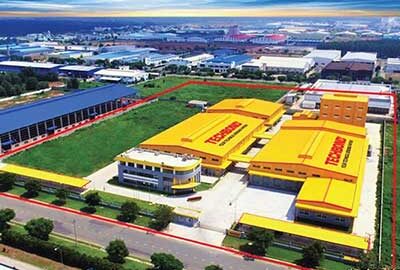
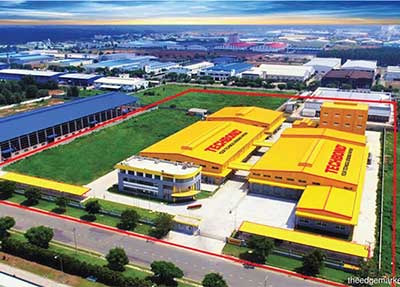
The new VSIP2 factory complex, which commenced operations in June, is the group’s third manufacturing facility and its second plant in Vietnam. Main Market-listed Techbond also has manufacturing facilities in Shah Alam, Selangor. Besides the polymerisation plant, Techbond’s VSIP2 factory complex also houses two water-based adhesives manufacturing lines, as well as two warehouses, an administration office and a quality control centre.

“About two years ago, we started constructing our second factory in Vietnam. Our polymerisation plant is already in commercial production. We have imported some PVA polymer (from Vietnam) to Malaysia to produce water-based adhesives here,” Lee tells The Edge in a virtual interview. Lee’s father Lee Seng Thye, who is managing director of Techbond, is the single largest shareholder in the group, with 72% equity interest.

Other prominent names among its top 30 shareholders as at Oct 20 last year were Avenue Portal Sdn Bhd, JAG Capital Equity Sdn Bhd, ACE Private Equity Sdn Bhd — a unit of financial services firm ACE Group — and three Hong Leong funds. JAG Capital Equity is an investment trading company wholly-owned by ACE Market-listed total waste management company JAG Bhd, while Avenue Portal is controlled by Datuk Ng Aik Kee.

Techbond’s polymerisation plant has an installed production capacity of 4,680 tonnes a year. About 30% of that is for its own raw material consumption, another 30% is for sale to customers — mainly polymer distributors and trading houses — and the remaining 40% used to develop new types of industrial adhesives.

Lee says the completion of the VSIP2 plant was delayed by the Covid-19 pandemic, resulting in a higher capital expenditure incurred. Including working capital, Techbond has invested about RM27 million in the new factory complex, which sits on land measuring 30,000 sq m and has a built-up area of about 7,000 sq m.

“Right now, our polymerisation plant is running at a 30% utilisation rate, and this capacity has been fully allocated for our internal use. We are already using our own polymer in our Vietnam and Malaysia operations. Previously, we purchased polymer from third-party suppliers. Compared to the prices that we [paid to them], our polymerisation plant in VSIP2 can give us an estimated savings of 20% of raw material cost,” he says.

Techbond’s new plant also enjoys full tax exemption on its income in the first two years, followed by a 50% reduction of tax payable in the subsequent four years.

Before the pandemic, the polymer business was estimated to contribute annual revenue of up to RM100 million to the group.

He notes that Techbond is, however, fortunate that it has a well-diversified customer portfolio geographically. Today, 75% of the group’s revenue is derived from overseas markets such as Indonesia, China and Cambodia.

dupont

DuPont expands medical elastomer capacity in Michigan

DuPont expands medical elastomer capacity in Michigan


dupont

DuPont celebrated the inauguration of new medical elastomers mixers at its Healthcare Industries Materials Site (HIMS) in Hemlock, Mich., with a formal ribbon-cutting ceremony. The investment in the new mixers is reportedly in response to increased supply needs from DuPont Liveo Healthcare Solutions customers. According to DuPont, the capacity expansion will:

*Expand in-house medical-grade silicone elastomer (liquid silicone rubber and high-consistency rubber) manufacturing capabilities
*Enable sustainable growth in Liveo medical elastomer product lines serving specialty medical devices along the value chain
*Support the strong growth of in-house production of Liveo pharmaceutical tubing dedicated to biopharmaceutical processing, and of medical devices and topical blends.

The 8,000-sq-ft site expansion was a coordinated effort by DuPont staff and over 10 local contracting companies.

Global aerospace adhesives and sealants market is projected to reach $3.8 billion by 2030

Global aerospace adhesives and sealants market is projected to reach $3.8 billion by 2030


aerospace

Visiongain has published a new report on global adhesive and sealants market report up to 2030 : Forecasts Volume (KT) & Value ($m) Forecasts by Type (Epoxy, Silicone, Polyurethane, Others), by Technology (Water-borne, Solvent-borne, Other Technologies), by End-Use Applications (Non-Commercial, Commercial), by Region Plus Analysis of Leading Companies

In the past few years, global adhesive and sealants markets, including the aero-air and aviation industries, have grown substantially against the background of the economy. It leads to increased demand for high-quality adhesives, sealants, and the airplane and space shuttle function under extreme conditions. This led to a significant rise in the adhesives and sealants market in the last few decades. This report evaluates the current levels of global expenditure invested in the Aerospace Adhesives and Sealants market. In the next decade, the aerospace adhesives and sealants market will register strong growth. Visiongain forecasts that between 2020 and 2030, established aerospace adhesives and sealants market will see growth due to increasing safety concerns across nations.

It’s projected to reach a $2.2 billion global market of Aerospace Adhesives and Sealants in 2020 and a $3.8 billion market by 2030, with a CAGR increase of around 5.7% by 2020-2030. Consumer and marketing companies invest in innovation / R&D, product development and encourage strong customer connections to maintain their competitive position. Innovation / R&D For example, for its Adhesive Technologies division in 2015, Henkel invested over 300 million of dollars on R&D and produced about 30% of its revenues of adhesive products released over the last five years.

tape

3M announces change to global adhesives solutions labs

3M announces change to global adhesives solutions labs


tape

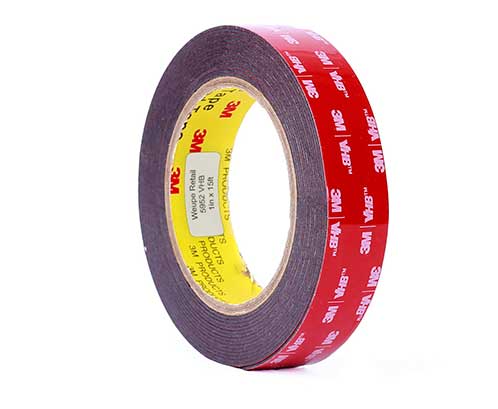
3M announces that its Industrial Adhesives and Tapes Division is evolving its Bonding Process Centers in St. Paul, Minn.; Neuss, Germany; and Shanghai, China. Against the backdrop of a growing trend toward automation in manufacturing, 3M Bonding Process Centers reportedly provide a starting point for designing and planning automated bonding solutions.

Formerly known as Global Adhesives Solutions Labs, 3M Bonding Process Centers connect customers with local 3M experts, facilitating a partnership to solve problems and optimiz\ze processes. Designed to help identify customized process solutions to complex bonding challenges, these centers now enable virtual access for customer consultations and live demos.

“Whether customers are interested in testing the latest innovations in dispensing and automation or are simply looking for a better tape or adhesive to bond their parts together, our scientists and engineers will work with them to identify, tailor and design custom solutions to their production challenges,” said Taylor Harper, 3M’s global Business Development director.